







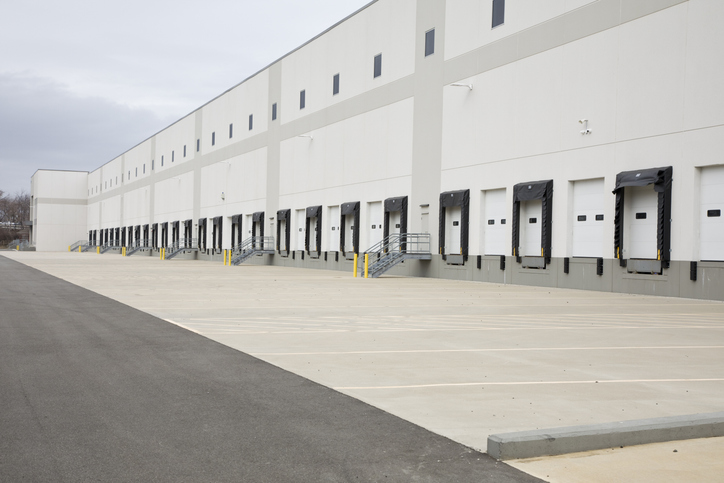
Smart technologies are revolutionizing the operation of warehouses, distribution centers, and factories as they concern their dock equipment. Because more and more businesses are migrating towards an integrated logistics approach, IoT-based solutions enable easier communication between doors, sensors, yard trucks, and safety equipment. This, in turn, enables businesses to obtain real-time information.
These technologies have become a necessary component for any facility that wishes to optimize and improve efficiency. Using modern sensor technologies and software, businesses are better equipped with knowledge of gaps and unexploited opportunities. The modern improvements will enable more proactive and precise services with regard to commercial dock equipment services.
1. IoT Sensors Enable Real-Time Monitoring And Smarter Responses
The IoT sensor monitors door operations, equipment stress, temperature, vibration, and safety risk. It will enable managers to detect issues before they progress into an operational delay or downtime. Information gathered from these sensors will enable facilities to have a better understanding of docking productivity.
A significant advantage offered by these systems is remote observation, particularly useful in large warehouses. Combined with commercial overhead door repair services, these systems will automatically send alerts, thus preventing failures that might affect loading schedules.
2. Predictive Maintenance Reduces Breakdowns And Repair Costs
The traditional approach at a dock requires a wait-and-fix type of maintenance. IoT helps with predictive maintenance. It analyzes data and points out tendencies that might be an indication of a problem with rollers, a dock leveler, motors, and control systems.
By detecting these issues early on, facilities can set schedules for maintenance work at times with less impact. Moreover, businesses looking for a commercial overhead door service near me usually turn to IoT-based solutions for more stability. Unplanned breakdowns are reduced with predictive analytics. Equipped with predictive analytics, facilities can optimize budgets and improve useful life.
3. Smart Dock Levelers Enhance Safety and Loading Efficiency
IoT-connected dock levelers are continuously evaluating pressure, alignment, position, and hydraulic functionality. All these changes have ensured worker safety and reduced strain on equipment.
Automatic alerting enables managers to be notified about misaligned, overloaded, and worn-out levelers. These technologies can be effectively implemented with the dock automation system installation, allowing simultaneous movement and preventing unexpected drops.
4. Remote Access Enables Rapid Diagnostics and Minimizes Disruptions
Dashboards allow teams remote access to readings, equipment, and control systems. It is very useful for multi-site facilities or businesses with employee turnover.
It becomes easy for managers to identify any problems without having to walk across large warehouse areas or without having to disrupt production. Together with professional warehouse dock equipment service, remote management will improve response times and reduce unexpected downtimes due to equipment failures.
5. Automated Alerts Improve Safety Compliance and Awareness at Work
Safety sensors communicating via IoT networks alert employees about potentially hazardous conditions involving equipment. Examples include open doors, forklift warning areas, high temperatures, and stalled equipment.
Automated systems also log incident history, which aids facilities in optimizing compliance procedures. Eventually, these historical accounts fortify training, inspections, and response procedures, making docking procedures safer and more predictable.
6. Energy-Efficient Controls Lower Operating Costs
IoT ensures that commercial docking systems have higher energy efficiency. IoT automatically reduces unnecessary usage of motors and manages lighting based on changes in the environment.
Smart doors, for instance, will allow opening and shutting as soon as cars are detected and will then immediately close. It prevents energy consumption, temperature changes, and strain on air conditioning systems, especially for temperature-controlled storage sections.
7. Data Analytics Enhance Workflow Decisions & Dock Utilization
IoT data shows loading behavior, dwell times, bottlenecks, and times of low productivity. These types of facilities can solve problems and optimize operations regarding manpower allocation and routing.
All these pieces of information also enable businesses to make better inventory planning and yard communication, and to streamline operations. All these factors make IoT and logistics planning an integral and essential aspect.
8. Integration with Warehouse Automation Enables Overall Efficiency
IoT integrates easily with robotics, conveyors, fleet management systems, and other automatic systems. It becomes easy to analyze and predict workflows once dock doors, levelers, and safety systems communicate with facility software.
It helps reduce human observation and chances of making mistakes, particularly when it comes to large logistical operations. As more and more automation becomes a reality, IoT connectivity continues to enable stability and accuracy within operations.
Conclusion
IoT is revolutionizing loading docks into highly efficient and data-informed arenas that align with safety and speed. From predictive maintenance to alerting capabilities, intelligent systems are making everyday operations more efficient and minimizing risks.
All these enhancements will be useful to every size warehouse as they help in overcoming labor challenges and improving productivity. IoT is also revolutionizing the demands for modern warehouses and will bring benefits in the long term.
Technology-forward investment enhances safety, workflow harmony, and maintenance. IoT-enabled docking solutions are on the verge of becoming mainstream for facilities that want to maintain a competitive edge with regard to an ever-more competitive logistical arena.
Upgrade your dock operations with smart, reliable solutions from Southeastern Overhead Door. Connect with our expert team at 225-753-1595 today for service that keeps your facility efficient, safe, and ready for future performance.
FAQs
1. What are the advantages of IoT assist systems for business dock equipment?
IoT enhances monitoring, maintenance scheduling, workflow tracking, and safety because it provides insights and automates critical operations at the docking station.
2. Can IoT help reduce downtime in warehouse dock systems?
Yes. IoT detects problems early, and there are automated notifications as well as predictive maintenance capabilities. It prevents unexpected failures.
3. How does IoT integrate with existing docking automation systems?
IoT sensors and software interact with levelers, doors, conveyors, and robots. These interactions enable coordinated and efficient operations within a warehouse.