







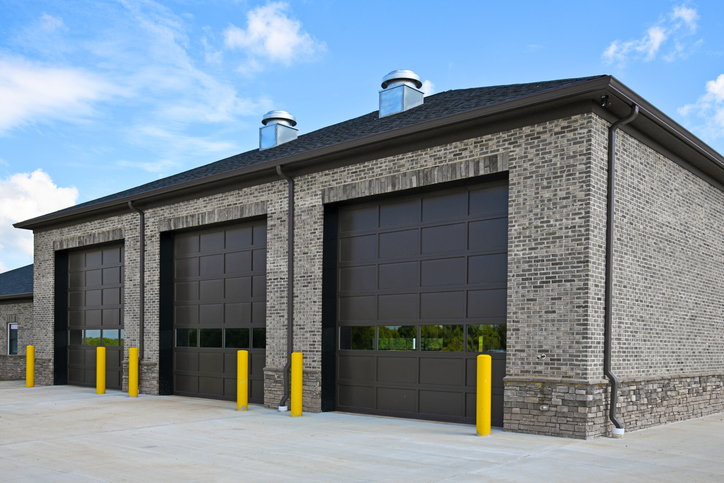
Modern facilities employ automated overhead doors that offer safety and efficiency daily. As standard components today increasingly feature intelligent sensors and networking capabilities, facility maintenance continues to grow in importance.
This blog discusses how regular maintenance and targeted upgrades can improve performance, enhance system reliability, and address rising demands. This is your comprehensive source for information about commercial overhead door maintenance and its importance.
1. The Necessity for Specialized Service For Modern Automated Doors
Contemporary business doors have sensors, access control, high-performance rollers, and automation devices-all integrated. Furthermore, due to interconnectivity, there might be an impact on multiple components due to some petty issues.
Regular inspections allow problems with misalignment, old components, and electronic issues to be identified. It becomes less likely that there will be sudden downtime that could potentially bring an operation to a standstill.
2. The Increasing Role Of Digital Sensors And Calibration
Digital sensors control door movement, obstruction detection, and a secured entrance. Because of time, vibration, usage, or temperature, they become outmoded.
The calibration maintains an unaggressive pattern of movement and responses. It often becomes necessary for facilities to search for commercial overhead door repair near me because sometimes the sensors lose response, and calibration prevents it.
3. Reducing Rail, Roller, And Lifting Component Wear
The physical door components remain most affected by various cycles, the presence of water, dust, and unlevelled floors. Smart systems have it tougher with worn-out rollers and tracks.
Smoothening, alignment, and tightening of hardware work as balancing agents. The above steps will also postpone the need for larger commercial overhead door repair services because they slow down deterioration.
4. Role Of Connectivity And Smart Controls On Maintenance Requirements
IoT-capable controllers also allow linking of the device with various security software, warehouse management, and even mobile phone apps. All these modern technologies require updates on software, examination for backup, and testing for internet connections.
Neglecting these updates leads to delayed or inaccurate responses from an automation system. Mechanical maintenance and digital audits have been suggested as recommended practices by most local overhead door contractors.
5. Noise-Related Aspects Within Busy Operations
The automatic doors are associated with either squeaks, grinding sounds, or even vibrations. These are associated with worn-out rollers, misalignment, and looseness in the tensioning of door hardware. Not only are these annoying sounds, but also indicative warning signals.
A noisy commercial garage door fix during regular maintenance will prevent these small problems from becoming large ones and thus help aid with quiet operation within professional settings.
6. Components Upgrade Timing For Efficiency Improvement
As older systems get older, motors lose strength, sensor technologies become dated, and insulation integrity decreases. Upgrades enable faster door cycles, better security, and more streamlined automation.
Component replacement enhances longevity with consistency with newer facility technologies. Upgrades will also enhance energy efficiency and workflow.
7. Why Documentation And Maintenance Logs Matter
Having a maintenance schedule on record will be an advantage for every facility. The logs will be your source for tracking component replacement, lubrication cycles, door cycles, and observations made by a technician.
Having clear records makes budgeting easier and helps identify trends related to when any given set of components might be approaching the end-of-life stage. Logs are also useful in checking compliance scenarios.
8. Role Of Maintenance Within Larger Facilities
Automated doors affect the rate of shipping, inventory movement, and organization of the loading platform, as well as internal transportation control. Once an automation door fails unexpectedly, it will significantly slow down or bring these processes to a standstill.
Regular commercial overhead door service ensures that there will be no surprise downtimes. It also helps plan the working process. It becomes extremely useful for large warehouses and even temperature-controlled environments.
Conclusion
Although modern automatic overhead doors are more advanced than ever before, they still need some maintenance if they are going to operate at an optimal level. Electronic calibration and upgrades offer a degree of assurance.
Maintenance records and collaboration with professional technicians are useful in preventing costly maintenance as well as reducing pressure on systems. Even facility operations become safer. By incorporating these updates consistently, a business can protect the circle of productivity and extend the life span of equipment and tools.
Keep your smart automated systems performing at their best with expert care from Southeastern Overhead Door. Call us at 225-753-1595 today for reliable commercial overhead door care that protects your operation.
FAQs
1. What would a smart automated overhead door need most?
The most essential regular operations include lubrication, sensor calibration, tightening, motor checks, and safety testing cycles.
2. How frequently should overhead doors for businesses be maintained?
A majority of these facilities can greatly benefit from inspections on a quarterly basis, with some requiring inspections on an average monthly basis, particularly within high-cycle facilities like distribution centers and large warehouses.
3. Why does my automated overhead door make so much noise?
Unusual sounds usually indicate either roller wear, imprecise tracking, or tension irregularities. A repair at an early stage avoids costly component repair.